Photo: Sandro Lopes Art / Pexels
While much of the world’s attention was fixed on wars and airport chaos, a small Atlantic archipelago quietly did something it has become known for: it held a calm, orderly election. On Sunday, 15 November 2026, Cape Verde re-elected President José Maria Neves in the first round, according to provisional results from the national electoral commission.
A clear result
Neves, backed by the African Party for the Independence of Cape Verde (PAICV), took 63.8% of the vote. That is a far stronger showing than in 2021, when he also won in the first round but with 51.75%. According to the Inforpress news agency, he came first in every constituency at home and abroad except the island of Maio.
His main challenger, lawyer Joana Rosa, supported by the Movement for Democracy (MpD), the main opposition party, finished second with 31.6%. Four other candidates, Gilson Alves, Antero Tavares, Casimiro de Pina and Loisito Tavares Sousa, shared the rest, none of them reaching 1.5%.
A first, even in defeat
The result carries a historic footnote. Rosa, 61, was the first woman to run for the presidency since Cape Verde became independent from Portugal in 1975. She conceded on election night and said she had already called Neves to congratulate him. “Assumo estes resultados como a expressa da vontade dos cabo-verdianos,” she said, accepting the outcome as the will of the people. She added that she believed her candidacy had helped to raise women’s participation in politics.
A nation that votes from abroad
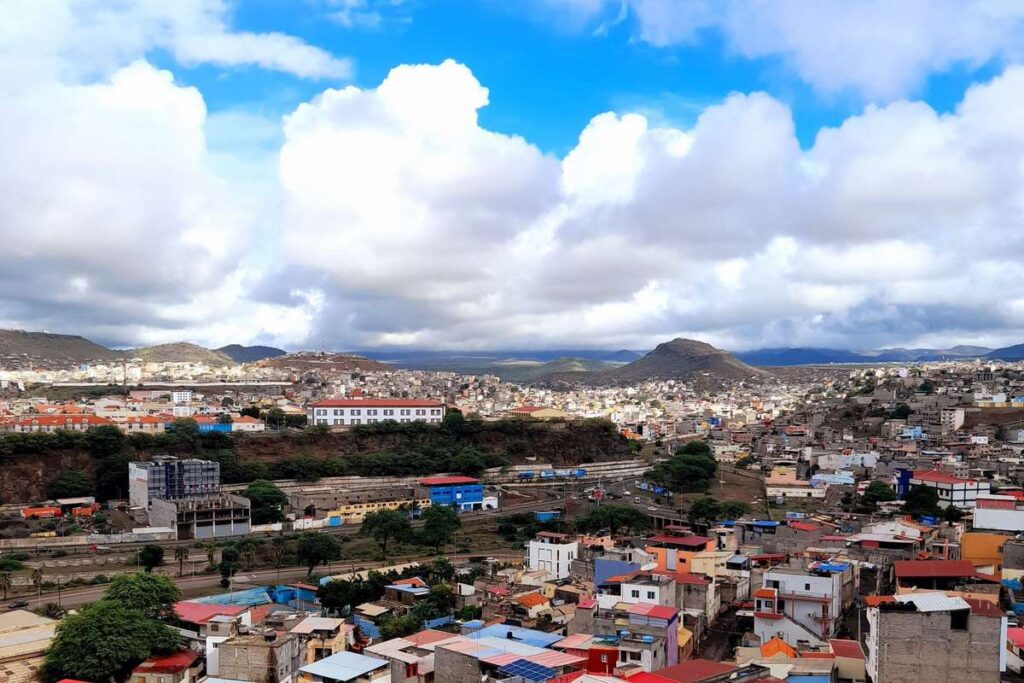
Cape Verde is a country with more citizens outside its borders than inside them. Around 500,000 people live on the islands, more than 600 kilometres off the coast of West Africa, while an even larger number of Cape Verdeans live overseas, mainly in the United States and Portugal. That reality shapes both its politics and its ballot.
Of the 419,448 registered voters, 76,383 were registered in the diaspora, and 243 of the 1,302 polling stations were abroad. Reuters noted that the campaign focused on emigration and on the need to create more jobs for young people, the very people most tempted to leave.
The quiet problem: turnout
If there is a worrying number in the results, it is not the margin but the abstention. With nearly all polling stations counted, about 68% of registered voters stayed away. A president who wins nearly two thirds of the vote has, in effect, been chosen by roughly a fifth of the electorate.
Low turnout in a presidential vote is not unusual in a parliamentary system, where the head of state has a more limited role than the prime minister. But for a country that prides itself on democratic stability, keeping citizens engaged, especially the young and those abroad, is a real challenge.
Watched from outside
Some 150 observers from the Economic Community of West African States, the African Union and the European Union followed the vote. Cape Verde, regularly praised as one of Africa’s most stable democracies, once again offered them little drama.
The electoral commission will publish final results once all counting is complete. For now, Neves has his second term, Rosa has her place in history, and Cape Verde has added another calm, uneventful election to its record. In a turbulent year, that is news in itself.
Photo: Sandro Lopes Art / Pexels