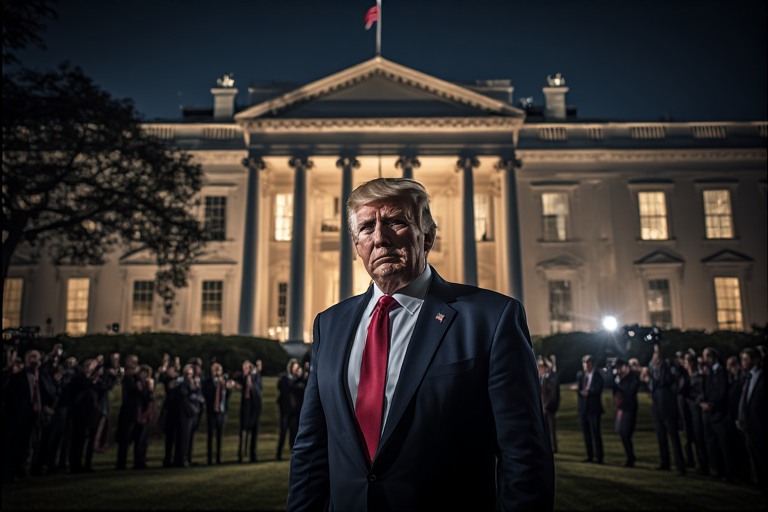
White House Fight Night 2026: “Bad Boy Politics” Turns Washington Into a Possible Combat Stage
It sounds unbelievable at first. Almost like a joke someone would post online just to see reactions explode. But in 2026, the idea of a massive UFC-style fight event near the White House is no longer just internet fantasy it has become a serious topic of discussion, speculation, and controversy all at once.
The concept being circulated under different names, including references like “UFC Freedom 250,” has triggered a global wave of reactions. Some treat it as an exciting crossover between politics and sport. Others see it as an uncomfortable fusion of entertainment culture and political symbolism.
And once again, at the center of the discussion is Donald Trump.
The “Bad Boy Politics” Narrative
In media culture, Trump is often portrayed in a highly polarized way. Supporters describe him as bold, strong-willed, and unfiltered. Critics view him as chaotic, provocative, and heavily associated with spectacle-driven politics.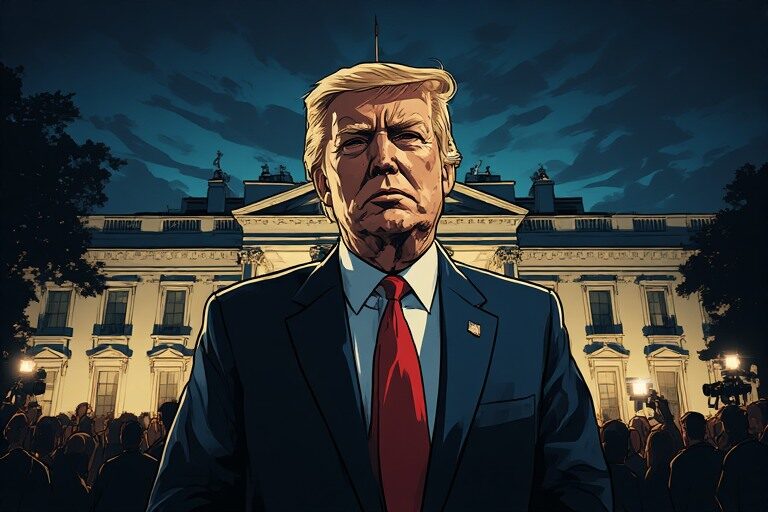
Online narratives sometimes exaggerate this further, shaping a “bad boy politics” archetype an image of a leader who thrives in controversy, attention, and high drama public moments.
This perception is a key reason the White House fight event idea spreads so quickly in online spaces.
The Origin of the Discussion
According to circulating commentary and partial reports, UFC leadership has explored ideas for large-scale landmark events in Washington, D.C., potentially tied to national celebrations.
Trump has also been associated in public commentary with the concept of major fight sports events as forms of entertainment and spectacle.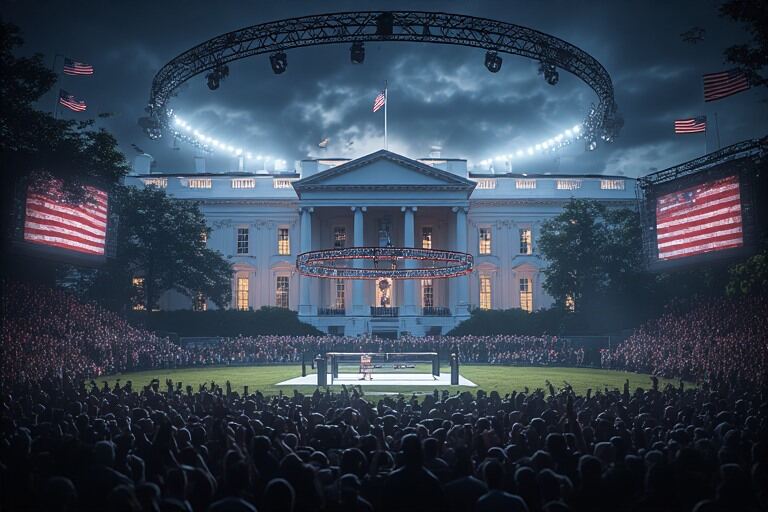
From there, online discussion expanded rapidly, reshaping the idea into something far larger than any confirmed proposal.
How the Internet Amplified the Idea
What began as structured discussion quickly evolved into viral storytelling.
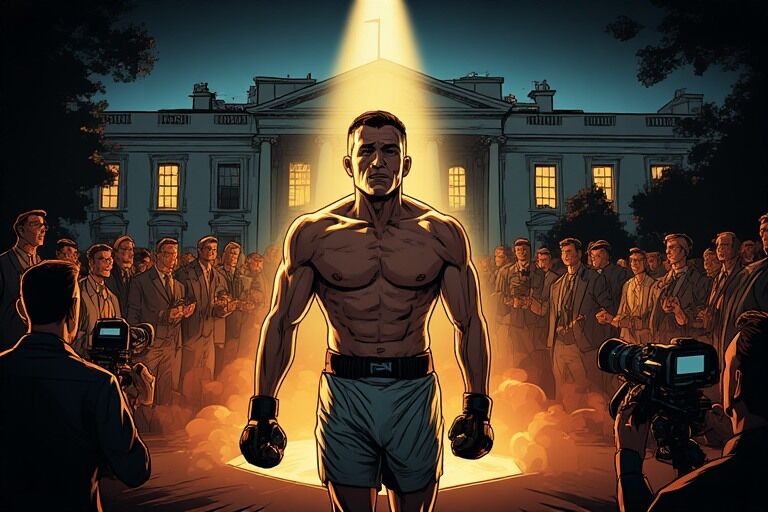
In online interpretations, the White House transforms into a symbolic arena:
- A temporary octagon placed in a high-security setting
- Large screens surrounding a public viewing area
- Global broadcast coverage
- A festival-like atmosphere blending sport and politics
These versions are highly dramatized and reflect imagination more than confirmed planning.
Reality vs. Speculation
There is no confirmed plan for the White House itself to host a combat sports event. What exists is a mix of proposals, commentary, and speculation that has been expanded through online interpretation.
The reality sits somewhere between:
- Possible UFC special events in Washington, D.C.
- And internet-driven exaggeration into a cinematic concept
Still, the discussion continues because it feels plausible in today’s media environment.
Why the Idea Feels Believable
Modern culture increasingly blends politics, sports, and entertainment.
Leaders are judged not only by policy, but by presence. Sports events function as global media spectacles. Even political moments are consumed as entertainment content.
In this environment, the idea of a UFC-style event near a national symbol feels less like fiction and more like a reflection of current cultural trends.
The Debate Around Combat Sports
Supporters of MMA argue that it is a disciplined, regulated sport built on structure and skill. Fighters train extensively, follow strict rules, and compete in controlled environments.
From this perspective, large-scale events represent athletic excellence rather than violence.
Critics, however, argue that placing combat sports in politically symbolic spaces raises concerns about meaning, messaging, and perception.
The question becomes:
When sport intersects with political symbolism, does it remain sport or become something else?
The Role of Political Image
Trump’s inclusion in the narrative intensifies the discussion. His public persona is often associated with media visibility, strong messaging, and high-profile public events.
In online culture, this contributes to the “bad boy politics” framing an archetype of leadership defined by spectacle, controversy, and attention-driven presence.
Whether accurate or exaggerated, this perception fuels the viral nature of the White House fight night discussion.
Conclusion
The debate is no longer just about whether such an event could happen. It is about what it represents.
Politics, sport, and entertainment are increasingly overlapping in modern culture, creating spaces where spectacle becomes central to public attention.
So even if the White House fight night remains speculative, the conversation around it reveals something real:
We are living in an era where everything from leadership to sport is shaped by visibility, performance, and media amplification.
And that is why the idea continues to circulate, evolve, and capture global attention.